5 Mantras For “Forced Family Fun”
5 Mantras For "Forced Family Fun"
|
 Landon’s mother used the phrase “FFF” to describe mandated moments of family togetherness. Here are 5 things you can repeat to yourself before, during, and after your family time throughout the holiday season.
|



|
|
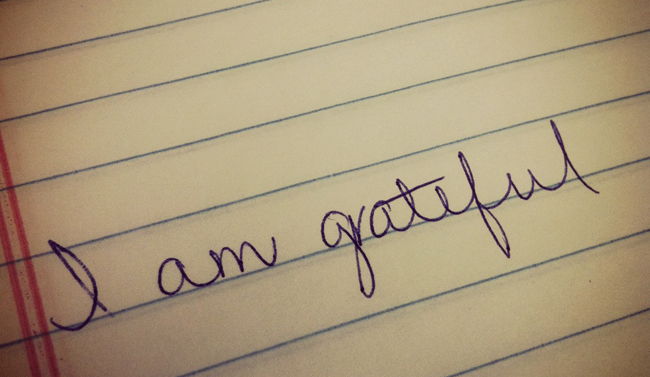
 Gratitude in the Holiday Season
As the aisles fill with tinsel and holiday cards, we recognize that to some people the jingle bells and mistletoe are welcome reminders of years of joy and tradition. Yet for others, it triggers a sense of grief, anxiety, and depression. Many might feel all of these things in the same day.
One tool for navigating the sometimes-overly-cheerful season (along with approaching it mindfully) is the daily practice of writing in a gratitude journal. The routine of getting into a posture of gratitude can combat feelings of despair at a subconscious level. We tend to see what we look for (what we call the Confirmation Bias). Gratitude will help you change how you see the landscape of your life by reprogramming your brain to look for the blessings rather than focusing on the ways you wish life was different.
Not to mention, the brain in a grateful state gets a natural extra dose of dopamine, the neurotransmitter responsible for helping you seek out rewards. This means your body will want you to continue to look for (and find!) reasons to be grateful.
But don’t just think it; write it down. The process of putting mental and emotional thought into a physical reality engages the brain at a deeper state. It also serves as a tangible means to review the reasons why you are grateful, even when you don’t necessarily “feel” the gratitude on a given day. Reviewing earlier entries can help kickstart that process.
Try not to make your gratitude conditional on your current level of happiness. You don’t actually need to feel happy to conjure gratitude. You can acknowledge frustrations, sadness, and even anxiety and still turn your mind toward an experience of the day or something in your life, and feel a sense of gratitude toward it. Go ahead and take the first step in a grateful direction.

 One of the first responses to chronic stress is evaluating our work life. Often, well-meaning friends and family suggest getting a better grasp on a “work/life balance.” The assumption is that you work too much and live “real life” too little.

 Our culture honors hard work to the point of sometimes worshiping it, so often we cannot see the tendencies of our hardworking nature to cross into the realm of addiction. Because working is praised by society and is necessary for well-being, it can hard for a person to admit that they have an unhealthy attachment to a good thing. With other addictions, specifically chemical dependency, the person attaches to something viewed as negative. But because work is a positive thing, the attachment isn’t always seen as negative.

 We’re designed for meaningful work. It gives us a sense of purpose, which is innate and imperative to feeling fulfilled. Even earthworms are purposeful in their work; they know instinctively to move through the dirt for a greater goal.
Just the idea of purpose drives much of our efforts, both at work and in service. From the TED stage, Dan Ariely explains how some people will quit working, even for higher pay, when they infer that the efforts are meaningless.
Some people find significance through their employment. Those in the helping professions (education, non-profit, social services and civil officers) often associate purpose with their jobs, which makes this quest for a meaningful contribution an easy association.
However, a career change isn’t always required in order to feel connected to meaningful work. Some people connect to meaningful work outside of employment, opting for roles that care for family or serve the community. More people use their hours outside of the office to cultivate a sense of contribution to a larger goal. Whatever the situation, attaching meaning to the ways you expend your energy remains a key element in cultivating a fulfilling life overall.

 In today’s culture where politics and other dichotomous issues seem to divide, we will come across people with whom we do not share similar opinions. We may work with them, raise children amongst them, and even live with them. As tragedies and disasters swirl around us, the solutions we offer may not match the ideas of those around us. So how do we live in disagreement, peacefully? How can we respond when we feel hurt by comments from those with whom we share life?
First, we begin with our values. What kind of person do I want to be? Rather than focusing on another’s viewpoint or action, start by reminding yourself of what you hold in highest esteem. Brene Brown says it’s “how we do things around here.” No matter what point on a spectrum you tend to fall, you can espouse the values of love and compassion, acknowledging the dignity of each person with which you engage in dialogue.
“Who do I want to be in this moment?” offers an implied action during times where we tend to feel powerless such as brewing arguments and moral dilemmas. Remember the values you hold dear. Choose behaviors and responses that are in line with those values. Being the person you choose to be during this experience minimizes the chances that anger and hurt will turn you into someone you are not.
Then, find what you share in common. Remind yourself that most disagreements stem from the how, not necessarily the what. For instance, you might have a disagreement in your house over loading the dishwasher. Begin by remembering that everyone wants clean dishes. You may agree with the method of loading the dishes; you might have friction over the importance of speed vs. efficiency of filling the dishwasher. At the end of the day, everyone want the dishes to be clean. It’s the how, not the what, that usually causes disagreement.
Next, recognize the potential for growth in each interaction. What does this person have to teach me? Perhaps you don’t come away in agreement with a particular point of action, but you might learn more about the above-mentioned values you wish to cultivate in all your future conversations.
Finally, set healthy boundaries around interactions with people. This practice often gets a bad reputation when people believe boundary setting only as cutting somebody out of your life. Instead, learning to detach with love from others’ hurtful behaviors is key to depersonalizing in a healthy way. Owning our part in conflict is essential in focusing on what we have control over, whether this is how we treated someone else or how we responded to they’re treatment of us.
Part of being human is acknowledging the distinctness of each individual: the gifts, perceptions, ideas and values that they embody. When we come from a place of scarcity and fear, seeing the value in all people can feel threatening. Another’s value does not negate our own, nor does it take from our own contributions to the world. There is more than enough to go around. Remembering this is central to living peacefully.