
Mind, Body, Health, Yoga

Mind, Body, Health, Yoga

Two women doing yoga on the beachMind, Body, Health, Yoga

Our minds and bodies are deeply intertwined. What happens in one often affects the other? At Mind Body Health Associates (MBHA), we don’t just treat symptoms: we work with the belief that healing involves both mental and physical processes, together.

How the Mind Influences the Body

  • From the moment we wake up, our brains are constantly absorbing sensory data, sights, sounds, smells, emotions and weaving that information into the internal narrative of our lives. This narrative helps shape our identity.

  • Normally, some of this processing happens when we rest or sleep: events get sorted, integrated, or let go. But when someone experiences trauma or intense stress, those experiences can sometimes get “stuck.” Instead of being processed and released, they linger in the nervous system.

  • Under persistent stress even if subtle (not just big trauma) — the brain may continue “holding on” to old emotional material. That might show up as sleeplessness, anxiety, mood shifts, or physical symptoms like tightness, tension, or chronic “background” discomfort.

How the Body Influences the Mind

  • Our physical state — whether our body feels relaxed, tense, drained, or energized shapes our mental and emotional landscape. Tight shoulders, shallow breathing, poor sleep, or chronic pain can all muddy our mood, our clarity, our sense of self.

  • On the flip side: when the body feels safe and regulated, our brain tends to mirror that calm. That’s why body-based practices movement, breathwork, gentle awareness — can create space for mental clarity, emotional balance, and deeper healing.

Why Healing Needs Both: Mind + Body

At MBHA, we understand that trauma, stress, and emotional wounds often lodge themselves not just in the mind, but in the body. Ignoring one half of that equation the physical sensations, the nervous system, the body’s responses — can leave parts of the healing incomplete.

With therapeutic approaches like EMDR (Eye Movement Desensitization and Reprocessing), we help gently “unstick” experiences. By accessing both memory and sensation, we allow the body–brain–mind system to re-process events, often in a more integrated, healing way.

Over time, that process can lead to:

  • Fewer intrusive memories or emotional flashbacks

  • Reduced physical stress symptoms tension, fatigue, digestive issues, sleep disruptions

  • A restored sense of safety in your own body and mind

  • Stronger self-awareness and agency over your inner life

You might also like: https://www.mindbodyhealthassociates.com/the-mind-body-connection-explained/


What yoga pose will make this kid listen?

What yoga pose will make this kid listen?

What yoga pose will make this kid listen?

Embodied Education

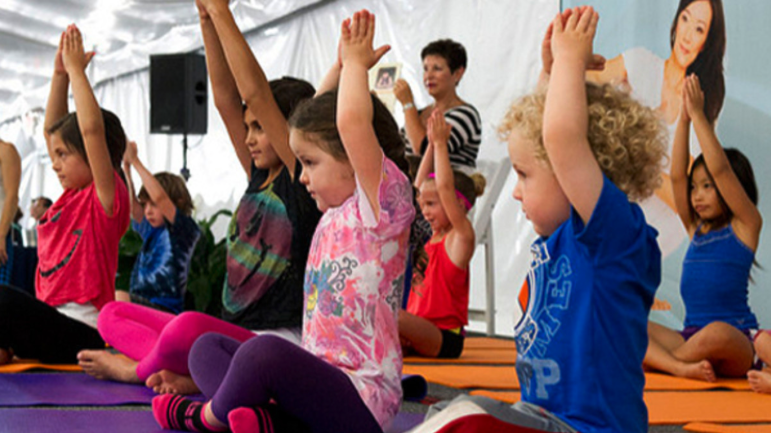
Thanks to a new study getting fabulous publicity, yoga is making its way into classrooms everywhere. At Mind Body Health Associates, we’ve long recognized the importance of bringing the body into the educational setting because of the way it is intimately connected to our brains. Children, especially, need their whole body to be engaged for maximum learning to occur. 

Our in-house yoga instructor, Michele Minehart, has worked with school districts offering yoga as part of their professional development, both as an experiential practice and as interventions for test anxiety. Education is eager to implement these simple tools that utilize the power of mindfulness. You don’t need to get your RYT 200© certification to reap the benefits of helping kids move their bodies and pay attention to their breath. If you’re looking to add a few tools to the toolbox, here are some suggestions:

  1. Start with breathing. Ask your kids to take a big breath before starting the next activity. Our classrooms are filled with hurry and taking a brief moment in the transition will help them to fully arrive at the next activity. 
  2. Give it only 2 minutes. Let go of ideas that you need to devote an hour of classroom time to yet another thing. Science says that 60-90 seconds is all that is required to return an activated stress response (fight or flight) to one that is ready to learn. A few deep breaths with arm movement followed by a standing forward fold, or a balancing pose on a day you feel fancy, is plenty for them to begin. 
  3. Name your targeted outcome. You’re probably not looking for kids to be able to wrap a leg around their neck. What are you looking for when you institute some form of classroom yoga? One of the most noticeable benefits is behavior change, specifically in the realm of self-regulation. You can create a habit with the children to take a deep breath when they’re angry before responding by practicing taking a deep breath while they’re not angry; over time the habit will develop. 
  4. Remember: Where the attention goes, the energy flows. Some kids may not like the classroom yoga because new things are frequently scary things (this is the body’s protective reaction).  You could meet reticence. That’s okay. Don’t use your energy trying to convince the apprehensive students. Instead, direct your attention to the ones who are participating and appreciating the experience. Success is the best PR, and the kids who are more slow to adapt will eventually want to join along. 
  5. Practice what you preach. You don’t need to join a fancy studio, but you can intentionally find ways to mindfully move your body.  Walks in nature and running are great alternatives, especially if you already have a practice. A home yoga practice can be led via youtube or free apps (Michele recommends Down Dog; therapist and yoga instructor Rachel Tincher loves the practices available on Amazon’s Audible). 

Kids have a BS sniffer and can sense if you don’t believe what you’re saying.  Integrate the idea of moving your body as you notice your breath and the present moment so that you can teach the tools with honesty and integrity. 

Pairing Treatment with Yoga

Pairing Treatment with Yoga

Pairing Treatment with Yoga

Yoga can help you manage symptoms of a taxed nervous system and give you tools for relaxation. Our EMDR-based approach leads us to recommend individuals to take up a yoga practice, either at home, in a local studio, or privately for several reasons:


  1. It’s bi-lateral movement, which calms the nervous system and preps the body to be able to better process our experiences, past and present. Mindful movement helps us dislodge our belief patterns in a way that sit-and-talk therapy doesn’t do by itself.
  2. It teaches us to notice sensations in the body. Thanks to a well-developed nervous system, our bodies are always able to tell us something about how we feel at the current moment. Sometimes the simplicity of a yoga practice helps us to tune into how we’re feeling in a way that a more complex activity, such as playing sports, does not.
  3. It’s breath-centered. Nothing brings you into the present moment and reaffirms your safety like a deep breath. Just 60-90 seconds of deep belly breathing can calm the hyper-arousal of the sympathetic nervous system “fight or flight” response. An hour or 30 minutes of mindful, breath-based movement brings your body and your mind into a calmed state to more easily process events.

Talk to your therapist about the benefits of pairing your treatment with yoga. Michele, our in-house yoga instructor, has worked with individuals dealing with issues of trauma, grief, addiction, and disordered eating. A season of private sessions might give you the confidence and the tools to take your practice into a studio setting, or set you up for a simple home practice. If you’re already wanting a studio-based practice, Peggy at Hot Yoga Findlay uses EMBER, a trauma-sensitive approach to yoga.


What Now?

Perhaps this new understanding has you wondering if you could benefit from EMDR, and this might be the case. Another option is to explore ways your body can help you navigate stress.

  1. Sleep more. A minimum of 8 hours, and more when necessary. Sleep is when the brain flushes most effectively, so give it ample opportunity to release unhelpful memories.
  2. Move more. Engage your whole body through walking, running, hiking, yoga, biking, swimming, or even simply bi-lateral movements or stretches. Let your body give your brain the nudge to process the days’ sensations and memories.
  3. Sit more. A practice of sitting comfortably and noticing your breath and the sensations of your body quiets the bodily systems. Here you can shift away from the problem-solving side of your brain. You’ll decrease the amount of stress hormones washing through the body and find a sense of relaxation needed to help your overall processing of your thoughts, feelings, and experiences.

The Mind Body Connection: Explained

The Mind Body Connection: Explained

The Mind Body Connection: Explained

EMDR, or Eye Movement Desensitization and Reprocessing, is a form of mental health treatment that has primarily been used to address the effects of trauma.  At Mind Body Health Associates, all of our clinicians are trained in EMDR and use it in their office as a form of therapy. While this treatment modality has been effective for a subgroup of our clients, it’s important to know that at MBHA, EMDR is more than a form of treatment – it’s a philosophy that undergirds our treatment approach with all.  Every session is held with the understanding that the body and the mind work together to restore health, which affirms the starting point of EMDR.

The brain, all day, every day, takes in sensory information. As it takes in our surroundings and daily events, the mind establishes a narrative around it. Essentially, we each tell ourselves a story about our life and this forms or supports the pieces that make up our identity.

While sleeping, those events and that narrative is processed; essentially they are broken down, made sense of, and either stored as longer term memories or flushed through our system. The important pieces of information find a home within our mind, forming memories. The unessential flow outward. (Research is still new in this area of how these moments get removed from our system, but we have some indication that it’s through the lymphatic system of our bodies.)

People who have survived trauma have experienced moments so terrifying that the mind does not know how to process or make sense of them. By definition, a trauma is something life threatening that does not make sense, is unpredictable, and is out of our control.  Instead of getting processed and “flushed out” during our nightly REM stage mental clean up, these moments essentially get stuck and processing is left unfinished. The presence of stress hormones such as cortisol and adrenaline contribute to the “sticking” of these experiences.  The brain continues to take in new information about each day, but all of these new moments pass by the the traumatic reference on their way to finding their home as memories. Some new memories can accumulate around the stuck experience, slowing the process of brain function.

However, it’s not just Traumatic experiences (commonly involving loss of person or power, such as grief or abuse) that can clog up the nightly flushing process. Holly Schweitzer Dunn refers to these as “big T Trauma” and explains that most people experience “little t trauma” at different moments in life. Jayne Williams chimes in: “we all have moments in our lives that are hard, and it depends on how we are able to process them that determines how they affect us.” Some “little t trauma” moments that aren’t able to be vocalized with close friends or family members in a supportive environment can also get lodged into our minds in a similar manner. This creates negative beliefs about ourselves and/or the world.

Usually, there comes a point where the brain becomes so overwhelmed that daily experiences cannot be processed appropriately. A person in this state cannot sleep, sees changes in appetite, experiences difficulty functioning in daily life, sometimes with symptoms of depression or anxiety. This is often when someone will call the office for help.

But as humans, we have amazing capacity for healing, and our bodies and our minds constantly work towards health. Our cut skin will grow back together and heal – unless it’s blocked, like when we experience a splinter. Even that small shard will prevent healing until it’s put in its appropriate place.

Similarly, our experiences and the way they are processed into our bodies are programmed for healing. Until the problematic experience is fully processed, our body and our subconscious mind will keep returning to it in an attempt to process it. It could be through the rumination symptom of depression, when our minds keep playing it over and over. Or, at a level less obvious to our awareness, we could simply be attempting to process an experience as we take on negative beliefs about ourselves and our world. For example, perhaps you were told at a young age that yellow was an ugly color. You might not have outward feelings toward the color yellow, but you might regularly have moments where you avoid the color yellow when given a choice, because the color yellow is that unprocessed memory coming to the surface, asking to be stored or discarded.

As a therapy tool, EMDR re-processes the memory with a different emotion or belief about the self. In a safe and supportive setting, we use the calming effect that movement has on the nervous system, such as moving the eyes, to begin to move the experience through channels of the mind. Much like a car stuck in the ruts of mud, we use movements to get the neural networks of the brain moving.

By keeping one proverbial foot in the present moment and recalling the past, we are able to attach new meaning to our experiences that draw up different emotions and beliefs about ourselves and the world. Working with a therapist to notice the sensations of the body when thinking about the color yellow, for example, we can notice the way these sensations also show up in other ways. Perhaps our belly clenches and our jaw gets tight when we think about the color yellow, but we also feel those sensations when we hear loved ones argue. Through the act of noticing, we can begin to tell ourselves a new story – not just about the color yellow, but about what is true when we feel these sensations. A clenched belly and a tight jaw can be translated, and we begin to say, “oh, I feel that thing again. What is happening around me that I might not realize is causing me to react?”

Whether or not your therapist and you agree to get out a light board or utilize sound tones in a formal EMDR session, much of your work with any clinical issue in our office centers on the function of past experiences and present sensations. We bring awareness of our body into treatment because it helps us to understand the story we’ve been telling ourselves about who we are and the world around us. And once we understand that story, we can address the negative and positive elements of it.